Who Should Get a Korean Lash Lift? Is It Right for Your Lash Type?
Find Your Perfect Lash Lift Who Should Get a Korean Lash Lift? Is It Right...
Read More 
Right Shield, Right Lift
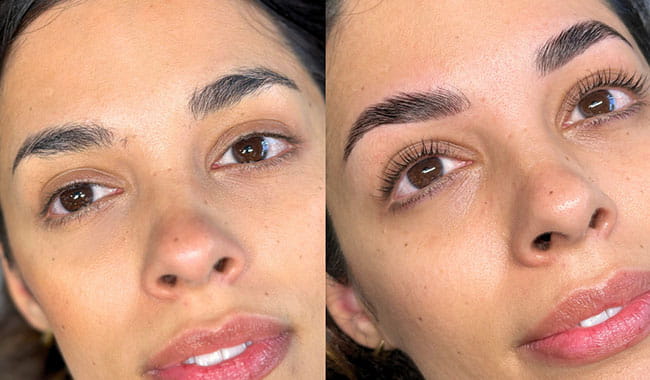
Choosing the right shield is one of the most important decisions a lash artist makes during a lash lift. The shield doesn’t only determine the amount of curl. It influences the direction, shape, lift and overall finish of the result.
With so much variation in natural lash length, texture, growth pattern and eye shape, no single shield works perfectly for every client. The key is learning to assess the natural lashes and match the tool to the result you want. At Elleebana, our range of Flex Rods, Flex Shields and Flex Hybrid Shields gives artists the flexibility to customise each service rather than taking a one-size-fits-all approach.
Before selecting a tool, assess your client’s lashes:
The same shield can create a very different result depending on the lashes it’s used on. Short lashes may benefit from a strong, root-focused lift, while long lashes need more space so the tips don’t sit too close to the eyelid. That’s why consultation should always come before tool selection.
For a soft, natural-looking curl, a Flex Rod can be an excellent choice. Elleebana Flex Rods create a C-shaped curvature, giving a softer result than the more directional lift of a shield. The curved shape lets lashes follow a natural outward direction instead of being lifted straight up.
Consider a Flex Rod for:
On long lashes, size matters most. A rod that’s too small can create excessive curl, while an unsuitable size may leave the lash tips sitting too close to the eyelid.
Flex Shields create a more directional, L-style lift, which makes them ideal when the goal is to visually lengthen the lashes and lift strongly from the base. Because the lash is directed upward rather than wrapped into a rounded curl, shorter lashes can appear more elongated. Elleebana identifies Flex Shields as particularly useful for short lashes, small eye shapes, hooded eyes and naturally curly or unruly lashes.
Consider a Flex Shield for:
Some clients don’t fit neatly into “rod” or “shield”. The hybrid design combines a rounded, rod-like base with a straighter upward lift, producing an M/L-style curl: curled at the base, with a more lifted direction through the mid-lengths and ends. That makes it versatile for clients with:
For artists who work with varied lash types, a hybrid shield is another option between a traditional C curl and a strong straight-up lift.
Once you’ve chosen between a rod, shield or hybrid shield, the next question is size. Lash length is your starting point: shorter lashes call for a smaller size and longer lashes a larger one. (Our step-by-step technique guide covers the basics of matching size to lash length.) Then check the fit. Elleebana recommends placing the tool against the eyelid and lifting the lashes onto it to check placement. Ideally the lashes should extend past the halfway point, or apex, of the rod or shield, roughly three-quarters of the way up. This helps create an appropriate curl and stops the lash from being wrapped too tightly or sitting incorrectly on the tool.
Inner-corner lashes are usually shorter, so don’t let them dictate your size. Use the majority of the lash line as your guide. Elleebana’s Tree Tool also includes a measuring guide to help identify a starting size.

Lash length mainly determines the size you need, but it shouldn’t be the only factor in choosing which type of tool to use. Eye shape can change that choice dramatically. Elleebana recommends considering rods for deep-set eyes, because the curved shape directs lashes outward and creates space between the lashes and brow bone, and for rounded eyes, where a shield may visually open the eye even further. Shields can work especially well on smaller eyes, where a stronger root lift creates the appearance of greater length.
Hooded eyes can suit either a rod or a shield depending on lash length and direction, so assess both before deciding. (For more on matching technique to eye shape, see our guide to choosing a style for different eye shapes.)
Downward-growing lashes can be harder to position. For some, a Flex Rod gives a beautiful result by creating a C curl that follows the lash’s natural direction rather than forcing it straight up. For very coarse, heavy or resistant lashes, the Korean Lash Lift technique may be more suitable, using a flat shield with viscosity control to hold the lashes in position. Tool selection and technique selection go hand in hand. (Our Korean Lash Lift guide covers this approach in detail.)
Naturally curly lashes often need a cleaner, more controlled direction rather than extra curl. Elleebana identifies Flex Shields as useful here, because the directional lift helps smooth and organise the existing curl, while a Hybrid Shield can keep some curvature at the base with a more elevated direction through the lash.
Fragile or over-processed lashes shouldn’t be pushed towards the strongest possible result. Lash condition must be assessed first, and a gentler approach may suit better than a technique designed for coarse, resistant lashes. (Our guide to lash lifting for thin and weak lashes goes further.)
| Natural lash / client need | Consider |
|---|---|
| Medium-to-long lashes | Flex Rod |
| Soft, natural C curl | Flex Rod |
| Downward-growing lashes | Flex Rod, or the Korean technique depending on lash characteristics |
| Short lashes | Flex Shield |
| Dramatic root lift | Flex Shield |
| Naturally curly or unruly lashes | Flex Shield or Hybrid Shield |
| Multi-layered lash lines | Flex Rod or Hybrid Shield |
| Mixed lash directions | Flex Hybrid Shield |
| M/L-style result | Flex Hybrid Shield |
| Deep-set or hooded eyes | Assess eye shape and lash direction carefully |
These are starting points, not rigid rules. Consultation, lash assessment and the desired result should guide the final choice.
1. How do you choose the right lash lift shield?
Choose a lash lift shield based on natural lash length, growth direction, curl pattern, eye shape and the client’s desired result. Flex Rods generally create a softer C curl, Flex Shields provide a more directional lift, and Flex Hybrid Shields combine curvature with lift.
2. What is the difference between a lash lift rod and a lash lift shield?
A lash lift rod has a rounded shape that creates a softer, curved result. A lash lift shield provides a more directional lift from the base, helping create a straighter, more elongated appearance. The right option depends on the client’s natural lashes and desired finish.
3. Which lash lift shield is best for short lashes?
A Flex Shield can be a suitable option for short lashes when the goal is to create a noticeable lift from the root. The artist should assess the lash length and select a size that allows the lashes to sit correctly on the shield without excessive tension or an unsuitable curl.
4. Which lash lift shield is best for long natural lashes?
Flex Rods can be suitable for long lashes when a soft, rounded C curl is desired. Flex Hybrid Shields are another option when the client wants both curvature at the base and a more lifted direction through the lengths. The correct size is essential to avoid excessive curling.
5. What size lash lift shield should I use?
The correct size depends on the natural lash length, the shield’s shape and the desired result. During placement, check how far the lashes extend across the shield and ensure they fit without being excessively curled or positioned too close to the eyelid. Assess the majority of the lash line rather than relying only on shorter inner-corner lashes.
6. Can the same lash lift shield be used for every client?
No. Clients have different lash lengths, growth patterns, eye shapes and curl characteristics. A shield that works well for one client may produce a different result on another. Individual assessment helps the lash artist select the most appropriate tool and size.
7. Are hybrid lash lift shields suitable for mixed lash directions?
Flex Hybrid Shields can be a useful option for clients with mixed lash directions who need both curvature and a more elevated lift. The final selection should depend on the overall lash pattern, lash condition and the result the client wants to achieve.
8. Should lash condition affect shield selection?
Yes. Thin, fragile or over-processed lashes require careful assessment before a lash lift. The artist should consider the lashes’ condition, choose an appropriate technique and avoid pursuing an unnecessarily strong result. Shield selection alone cannot compensate for compromised lash health.
9. Can eye shape influence lash lift shield selection?
Yes. Eye shape can influence how the final lift looks and how the lashes sit relative to the eyelid and brow area. However, eye shape should be assessed alongside natural lash length, growth direction and curl pattern rather than used as the only factor when choosing a shield.
10. How can lash artists achieve consistent results with different shields?
Consistent results start with a thorough consultation, accurate lash assessment, correct shield sizing and controlled placement. Lash artists should also follow the product manufacturer’s instructions, use appropriate processing times and assess lash condition before every service.