Brow Lamination and Tint: Everything You Need to Know Before Your Appointment
Shaped to Perfection, Naturally Enhanced Brow Lamination and Tint: Everything You Need to Know Before...
Read More 
Right Timing, Lasting Results
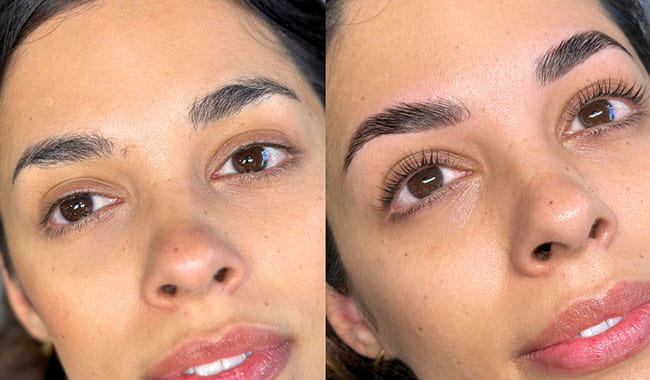
A lash lift is one of the easiest ways to enhance the appearance of natural lashes without adding extensions – creating a beautifully lifted, eye-opening effect while letting clients enjoy their own lashes with less daily styling.
Once clients discover how much they love their lifted lashes, one question comes up again and again: “How often can I get a lash lift?”
The answer isn’t simply a number on a calendar. Safe lash lifting starts with understanding the natural lash growth cycle, the condition of the lashes, the client’s treatment history, and the products and technique being used. This guide covers treatment frequency, when it’s appropriate to book the next appointment, and why professional assessment – not the calendar – should drive that decision.
For many clients, a lash lift can be maintained approximately every 6-8 weeks, depending on their natural lash growth cycle and lash condition. But this isn’t a universal rule – every client’s lashes behave differently. Some retain their lift longer; others see their natural lashes return to normal sooner as new growth comes through.
Rather than booking the next appointment purely by the calendar, a professional lash artist should assess the lashes first. The right question isn’t “has it been six weeks?” – it’s “are the natural lashes ready for another treatment?”
A lash lift is a chemical treatment that changes the shape of the natural lash, so repeated services need to be approached thoughtfully. Lashes are constantly growing, resting and shedding – which means a lift doesn’t permanently affect every lash for the whole gap between appointments.
As treated lashes naturally shed, new lashes grow in with their original, un-lifted shape. Over time, clients may notice some lashes still lifted while newer growth looks flatter, making the overall effect less uniform. This natural cycle – not just elapsed time – is the real reason a client eventually needs another appointment. Performing another lift too soon, while lashes still show signs of the previous treatment, risks unnecessary processing.
Rather than relying on the date of the last appointment, assess the lashes directly. Signs the previous lift has run its course typically include:
If lashes still show signs of previous processing or look compromised, recommend waiting longer.
Yes – more frequent treatments aren’t automatically better. Repeating a lift before the natural lashes are ready subjects them to unnecessary chemical processing, which can leave lashes looking dry, frizzy, weak, uneven or excessively curled.
A skilled lash artist weighs several factors before deciding: natural lash condition and texture, length, previous treatment history, new growth, the client’s desired result, and the specific products and processing system in use. The goal isn’t maximum frequency – it’s beautiful results that respect the natural lash.
A client may feel their lift has faded after four weeks and ask for another one – but that’s a judgement call, not an automatic yes. Examine the natural lashes and determine how much of the previous treatment has actually grown out. If they aren’t ready, waiting is the safer choice, and if many lashes are still visibly lifted, doing a full treatment over them risks unnecessary processing.
Part of the job is helping clients make an informed decision about their natural lashes – not simply delivering whatever they ask for on the day.
It can. Different lash lift techniques, products, processing times and application approaches produce different results. At Elleebana, professional education focuses on understanding the individual lash and selecting the right technique – such as Korean Lash Lift, Freestyle or Adhesive-Free approaches – rather than applying one method to every client.
That said, the technique itself isn’t a reason to automatically shorten the interval between appointments. The condition of the natural lashes should still drive the decision – and this matters even more for fine or fragile lashes, which may need more time between services, a modified technique, or a different approach altogether than someone with strong, coarse lashes. This is exactly why professional consultation, rather than a fixed schedule, should guide every case.
Good aftercare helps clients enjoy their results while waiting for their next professional visit:
Can a client get a lash lift every month?
Not automatically – a monthly schedule isn’t appropriate for everyone. Assess the natural lashes and how much of the previous lift remains before deciding.
Is 6 weeks too soon for another lash lift?
Not necessarily. Six weeks can fall within a typical maintenance window for some clients, but it depends on individual lash condition and growth cycle.
Can a lash lift damage natural lashes?
When performed correctly with an appropriate system and technique, a lash lift is designed to enhance the natural lashes. Repeating treatments too soon or over-processing can compromise lash condition.
What if the lashes still look lifted at the next appointment?
If a significant number of lashes are still visibly lifted, hold off on a full treatment until assessment confirms they’ve sufficiently grown out.
There’s no single schedule that works for every client – for many, 6–8 weeks is a reasonable general guide, but the condition of the natural lashes should always come first. A professional lash artist assesses the lashes, factors in previous treatment, and chooses the right technique and timing for each individual.
At Elleebana, we believe beautiful lash results start with professional knowledge, quality products and a customised approach – because the best lash lift isn’t the one with the biggest curl. It’s the one that enhances the natural lashes while respecting their health and integrity.
Ready to elevate your lash lift skills? Whether you’re an experienced lash artist or looking to expand your professional knowledge, Elleebana’s education and professional lash systems can help you build a more customised approach to lash lift timing and technique.