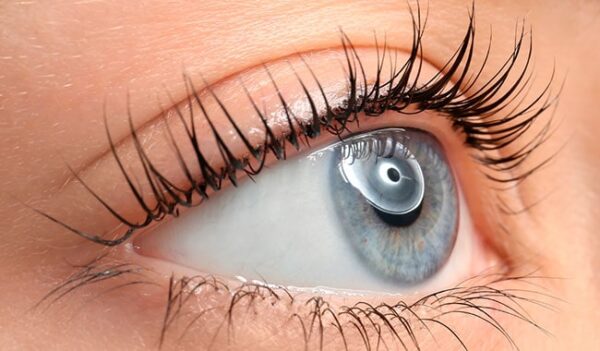
What Happens to Natural Lashes During a Lash Lift? A Guide to Structural Changes
Lifted by science, loved by your natural lashes What Happens to Natural Lashes During a...
Read More 
Right Timing, Healthier Lash Lifts

Every lash artist has met that client whose lashes simply refuse to cooperate. Some lift in no time, while others spring back to their old direction as if nothing happened.
The reason is rarely the shield or the lotion. More often, it is Korean Lash Lift processing time, and the habit of giving every client the same timing.
In this guide from Elleebana India, you will learn how to read different lash types, how timing changes with the Korean technique, and how to get a controlled, healthy lift every time.
New to the technique? Start with our complete guide to Korean Lash Lift in India and then come back here.
The Korean Lash Lift is built around precision. Instead of wrapping lashes directly onto a curved shield, you first position them upward on a flat shield, then apply the lifting lotion. This gives you far more control over direction and root lift.
It works especially well for:
The technique usually pairs the lotion with a viscosity controller, so the product stays exactly where you place it. For this approach, Elleebana recommends Elleeplex Profusion Lift and Set lotions with Elleemix Powder. You can find them in our professional shop.
Processing time decides how well your lotions actually work:
Too short: the lash isn’t flexible enough, so the lift is weak or doesn’t hold.
Too long: the lash becomes dry, frizzy or structurally weak.
The aim is not to process as long as possible. It is to process for the right amount of time for that particular client.
Fine lashes have a smaller diameter and often respond faster to lifting lotion.
Look for: thin strands, sparse areas, a fragile feel, or signs of earlier chemical damage.
Approach: Be cautious. If you don’t see the lift you wanted straight away, don’t just add more time. Watch flexibility closely and stay within the manufacturer’s timing guidelines.
These are the most common lashes in the treatment room. They have a good balance of strength and flexibility.
Look for: average thickness, healthy condition, normal flexibility, moderate resistance when positioning.
Approach: Start with the recommended protocol for your product system, and let the lash’s response guide you, not the timer alone.
These lashes are stronger and tend to return to their original direction. They are also a great fit for the Korean technique.
Look for: visibly thick strands, strong structure, and resistance when positioned upward.
Approach: Assess carefully, but never add time automatically. Check product saturation, viscosity, lash placement and how the hair responds during flex checks.
Many clients have lashes that point down or grow straight out, and these are hard to lift with traditional wrapping. The Korean method lets you set the lashes upward before processing begins.
Approach: Put your energy into accurate positioning, the right shield and controlled application.
Remember: Direction and thickness are two different things. A downward-growing lash is not necessarily a coarse one.
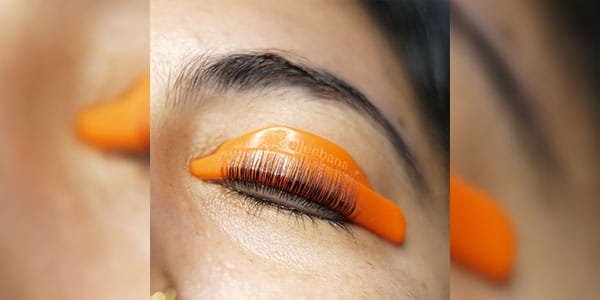
A timer tells you how long you’ve waited. A flex check tells you whether the lash is ready.
Gently test a representative lash with a suitable professional tool and observe:
Ready: The lash feels soft and pliable, folding into a V without snapping back.
Not ready yet: The lash resists or only forms a slight C-shape. It may need more processing, within the manufacturer’s permitted limits.
Keep checks gentle and minimal. Too much manipulation can stress the lash.
Elleemix Powder thickens the lifting lotion so it stays where you apply it. That gives you:
A thicker mixture can also change how the product behaves. It may penetrate and absorb differently, which can affect how long the lashes take to become flexible. This is why clock-only timing is risky with thickened formulas, and why regular flex checks matter even more.
| Common mistake | Better practice |
|---|---|
| Same timing for every client | Assess each client’s lash thickness and condition |
| Overprocessing coarse lashes | Watch flexibility and respect product limits |
| Leaving fragile lashes too long | Take a gentle, condition-led approach |
| Using too much product | Keep application controlled and precise |
| Ignoring viscosity changes | Remember that thickening can affect processing |
| Relying only on a timer | Do regular flex checks |
| Poor lash placement | Position lashes properly before processing |
| Traditional Lash Lift | Korean Lash Lift | |
|---|---|---|
| Method | Adhesive-based wrapping onto a shield | Flat-shield positioning |
| Positioning | Lashes positioned before processing | Lashes set upward before Step 1 |
| Best for | A wide range of lash types | Coarse, straight and downward-growing lashes |
| Product focus | Conventional placement | Viscosity control and precise application |
Neither method is “better” across the board. The right choice depends on the client’s lashes, the result they want, and your training. Curious about other options? Read about lash lift techniques for different lash conditions.
A great lift should never cost a client their natural lashes. Overprocessing can lead to:
If lashes are fragile, previously overprocessed or damaged, consider postponing the next chemical service and focus on conditioning and recovery first. And never extend processing time just to get a more dramatic curl.
Elleebana is an internationally recognised Australian lash and brow brand, trusted by beauty professionals around the world for its focus on education, innovation and lash health.
For Korean Lash Lift, Elleeplex Profusion and Elleemix Powder work together to give you control over placement and processing. At Elleebana India, we support artists with quality products, education and hands-on training.
Want to master these techniques? Explore our Offline Course and Online Course.
There is no single “correct” processing time for the Korean Lash Lift. Great results come from knowing the lash structure, assessing each client, choosing the right technique and watching how the lashes respond at every stage.
The best lash artists don’t just follow the timer. They understand the lashes.
Ready to level up your lash artistry? Explore professional lash-lifting products and training with Elleebana India.
1. How long does a Korean Lash Lift take?
The total appointment time depends on lash type, positioning, product application and processing. Korean Lash Lift can take a little longer because lash placement needs precision.
2. Do thick lashes need longer processing?
Not automatically. Thick and coarse lashes can be more resistant, but you should always check flexibility and follow the manufacturer’s guidelines before extending time.
3. Can I do a Korean Lash Lift on fine lashes?
Possibly, but assess their condition first. If lashes are fragile or previously overprocessed, a gentler alternative may be the better choice.
4. What is Elleemix Powder used for?
It is a viscosity controller that thickens compatible lifting lotions, helping the product stay in place and giving you more control during application.
5. How do I know Step 1 is finished?
Use a professional flex and comb check. The lashes should bend easily into a V-shape and feel soft and pliable, rather than resisting or springing back.
6. Can I use any lash lift lotion for this technique?
No, product compatibility matters. Elleebana recommends Elleeplex Profusion for its Korean Lash Lift approach and does not recommend One Shot for this specific technique. Always follow the latest official product instructions.
7. Is Korean Lash Lift better than a traditional lash lift?
Neither is universally better. Korean Lash Lift suits coarse, straight and downward-growing lashes especially well, while traditional or Freestyle techniques may suit other lash conditions better.